


Alexa for Shopping is automatically surfacing an “AI overview” appearing on general category searches within the SIDEBAR. We’ve seen something resembling this directly within the SERP at the top, but it has remained largely experimental. Here’s another one of their A/B split tests live that I foresee gaining traction.
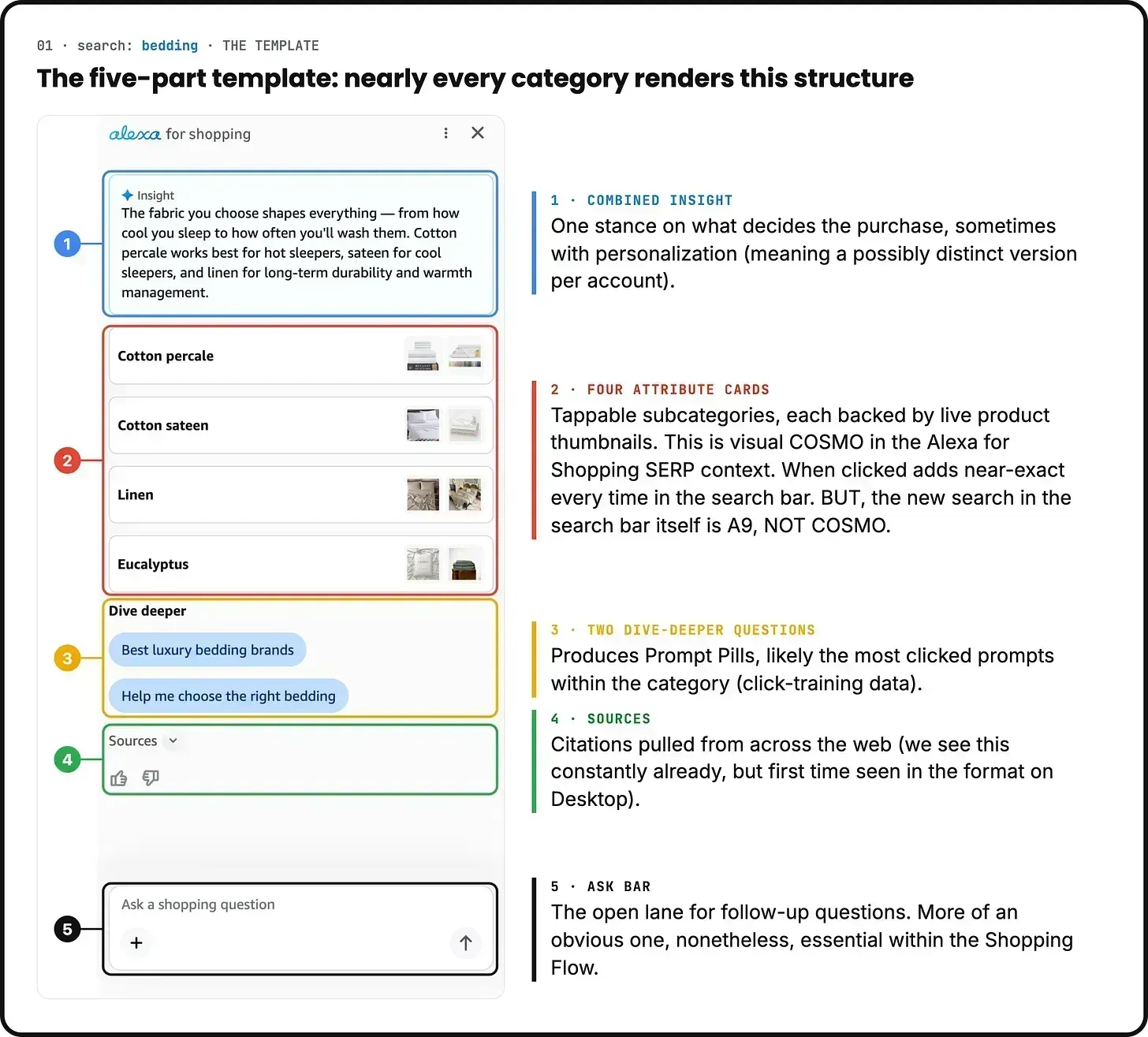
Overall insight of the category based on sources within and without Amazon. Sometimes personalized too (see the rug example below).
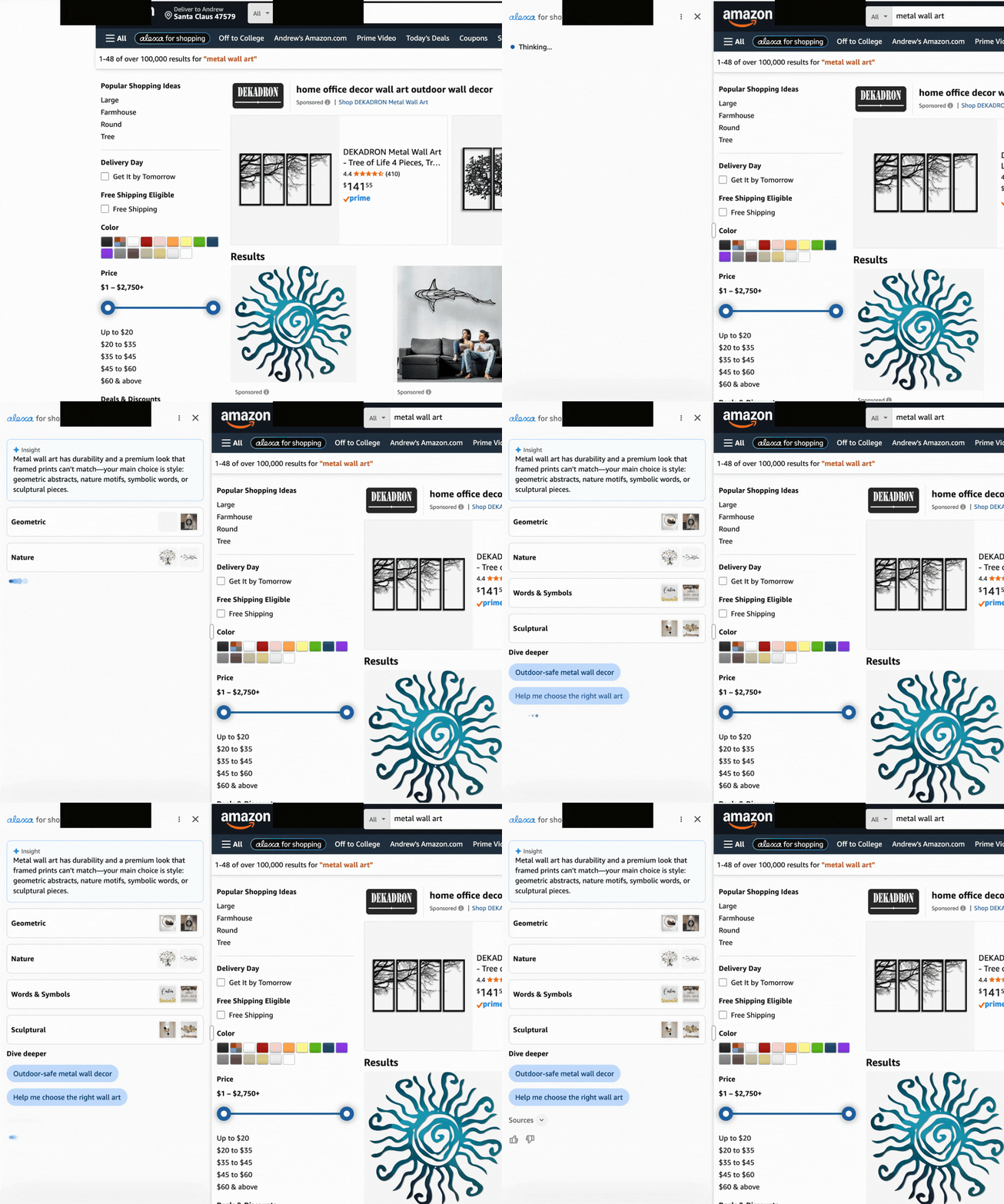
Visual navigation, when clicked, automatically applies the search to the “A9 search Bar.” For example, I click “nature” in the example directly below, “nature metal wall art” appears, occasionally, “nature inspired metal wall art” (by the way that is a masterclass in options), you will more than likely observe trails of the importance of longtail queries in listing optimization. Another facet too…. “COSMO!” overblown in our industry, but deserves attention. Especially here, a clear case of visual Cosmo (Figure 1). I did an in depth study on COSMO over a year ago; it is not an algorithm, but a knowledge graph and did NOT replace A9, these claims from others are highly exaggerated, well meaning as they are. BUT I support the science, which tells us Amazon SEO is alive and well, Alexa for shopping using the search bar far more intelligently. Cosmo does not ACT, but stores and shows itself at the navigational level.
As I suspected, over time, prompts populate across the marketplace based on click training data, showing us which prompts are clicked the most. In this case, research-type prompt pills appear, as a result of being clicked more often than other similar prompts within that category. I imagine a rotation of several prompts, as when I type in metal wall art again and again, variations of the same prompts show up.
Sources have been appearing for a while now, well-documented on desktop and mobile (even more to come here). In this case they feed directly into the insight and likely inform the nature of the AI overview’s content (not merely the text blurb). Also, a hint: see what you can do to get into these sources, a strategy I made up called “authority anchoring” (no acronym, so take a breath).
Perhaps five merely sounds better than four; nonetheless, there’s genuine importance in the “research bar” / “question bar” / “new search bar,” whatever helps you identify it.


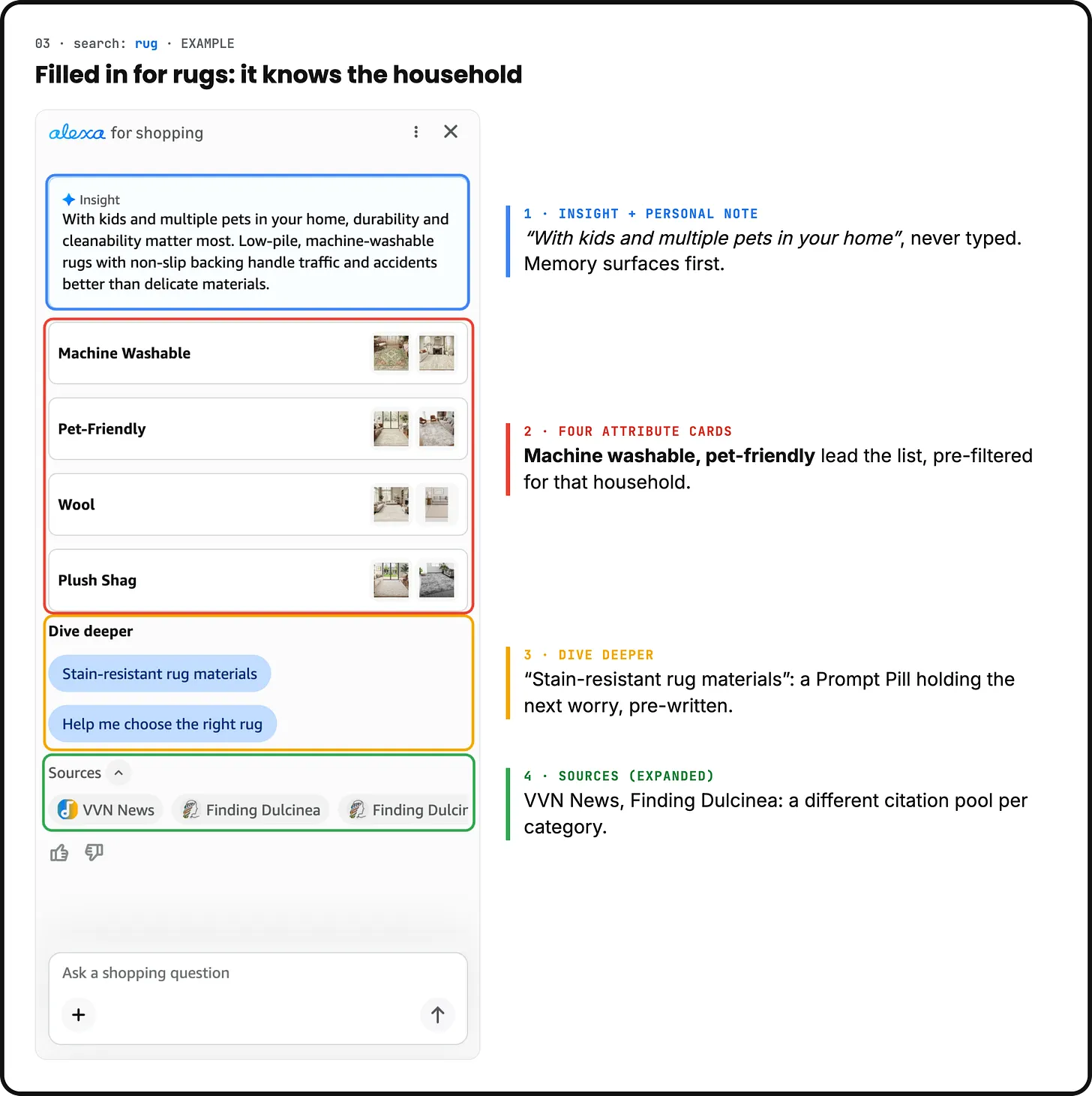
The rug example is especially significant because Alexa introduces personalized household context that was not included in the visible search term. The insight begins by referencing children and multiple pets, then prioritizes durability, cleanability, low pile, machine washability, and non-slip backing. Those inferred needs shape the order of the product pathways, with Machine Washable and Pet-Friendly appearing before Wool and Plush Shag. This suggests that the same broad category query may produce different decision guidance depending on account, session, or household context, making Alexa visibility potentially conditional on the shopper’s inferred circumstances rather than the typed query alone.
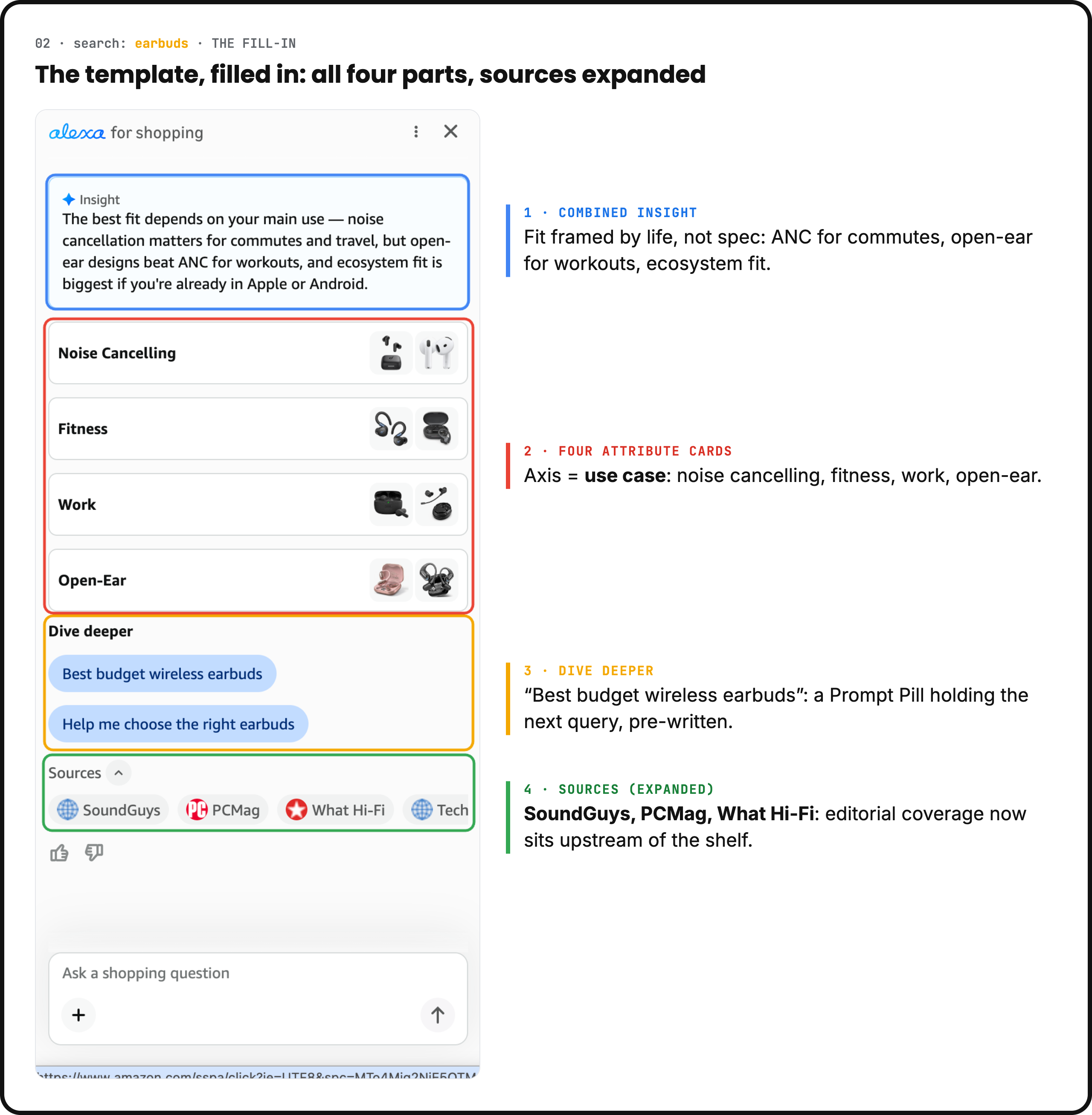
The earbuds example shows the same structure fully populated, but with the category organized around use case rather than technical specifications. Alexa frames the decision around how the earbuds will be used, separating the category into Noise Cancelling, Fitness, Work, and Open-Ear pathways, then offering prompts for budget-conscious shopping and broader product selection. The expanded source section cites publishers such as SoundGuys, PCMag, and What Hi-Fi, demonstrating that external editorial content can sit upstream of the Amazon product shelf. This creates a layered experience in which Alexa explains the category, proposes the decision framework, and then guides the shopper toward the most relevant product search.
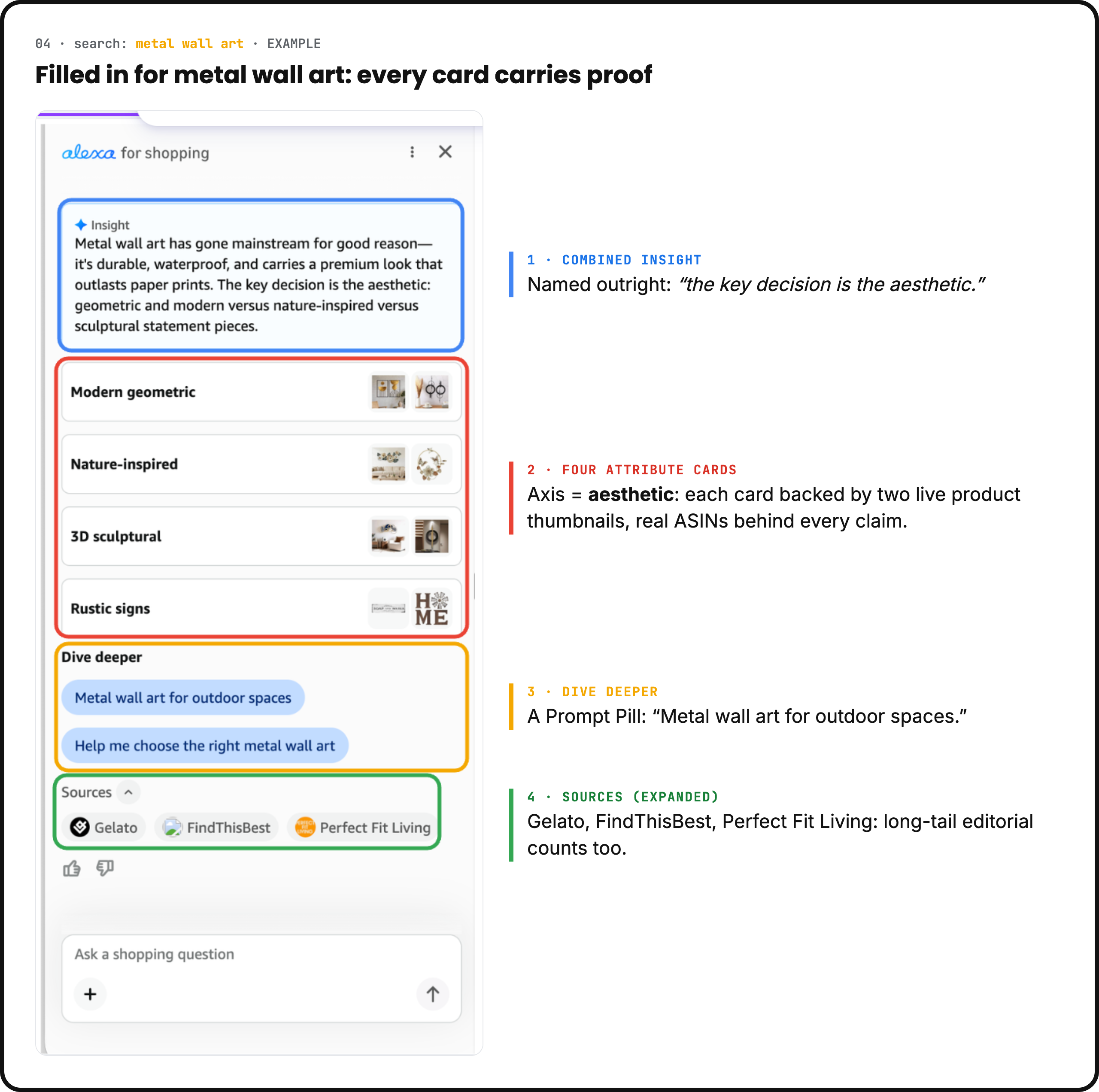
The metal wall art example demonstrates how Alexa can transform a broad category into an aesthetic decision architecture backed by visible product evidence. Alexa identifies aesthetic style as the primary purchase consideration, then divides the category into Modern Geometric, Nature-Inspired, 3D Sculptural, and Rustic Signs, with each pathway represented by live product thumbnails. The Dive Deeper prompts extend the journey into outdoor suitability and broader product selection, while the expanded sources show that smaller editorial publishers can also influence the category narrative. The result is a clear example of Alexa defining the category, turning that definition into navigable semantic pathways, and connecting each pathway to real products.
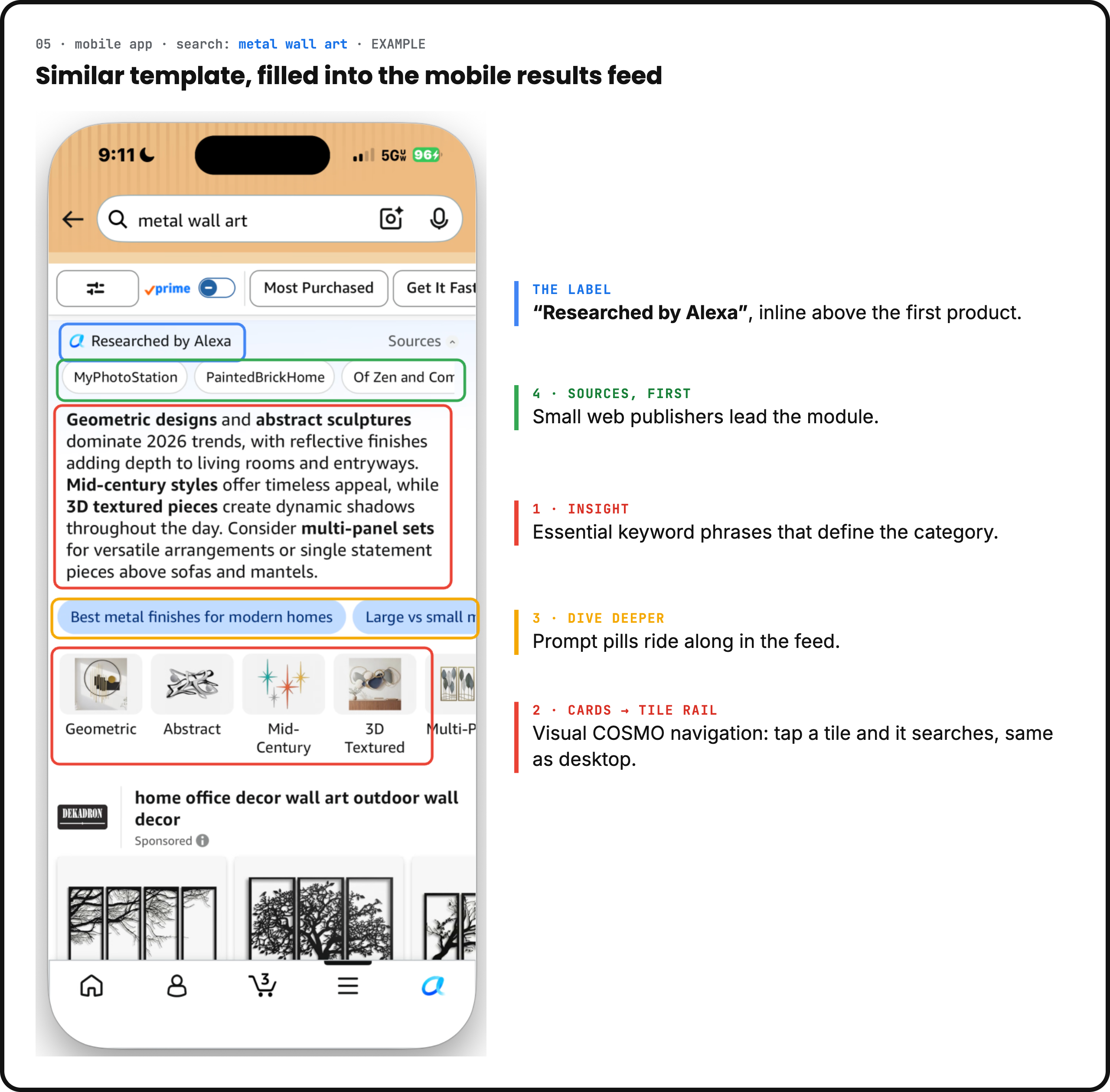
The mobile version shows the same Alexa for Shopping decision architecture embedded directly within the Amazon search results feed rather than contained in a separate desktop side panel. Labeled “Researched by Alexa,” the module places external sources first, followed by a synthesized category insight, Dive Deeper prompt pills, and a horizontally scrollable rail of visual shopping pathways such as Geometric, Abstract, Mid-Century, and 3D Textured. Each tile can move the shopper into a more specific search, allowing Alexa to interpret the broad category and shape the next query before the customer reaches the traditional sponsored and organic product listings below. This makes the mobile experience especially significant because Alexa’s research, category framing, and semantic navigation now sit directly upstream of the product shelf within the primary shopping flow.
A Final Word
Now, I cannot overstate the imperative nature of how Alexa for shopping is embedded deeply within the customer journey, at every possible stage, including all the substages within those stages. If you notice too, Walmart is merely copying Amazon across all surfaces.
WE are looking at one stage: the comparison stage. It sets the tone for the inevitable research journeys that come with shopping. I don’t think we give our shoppers enough credit for the effort they take on Amazon when searching, which is exactly why there’s an entire scientific search discipline called reformulation. And as I have written about in many papers and articles, instead of the mom having to type over and over in the search bar to find the right stuff, Alexa for Shopping does all the query reformulation for her. Shopping journeys are complex… arguably more so on Amazon than anywhere else.
How “AI Overviews” fit within Alexa for Shopping will continue to make more sense as her presence continues to appear across every stage.
