


As promised, on top of original playbooks and cutting-edge research I would be publishing breaking news, new things to Amazon, Walmart and beyond. Today are real life manifestations of the new Title Split.
Amazon title changes are now appearing in the wild. Right now I am only seeing them on mobile, but over the last five to six days I have been documenting Amazon’s new title structure across live results. Amazon is splitting titles into a Product Name plus Item Highlights, just as expected, and moving steadily closer to a model of structured product understanding.
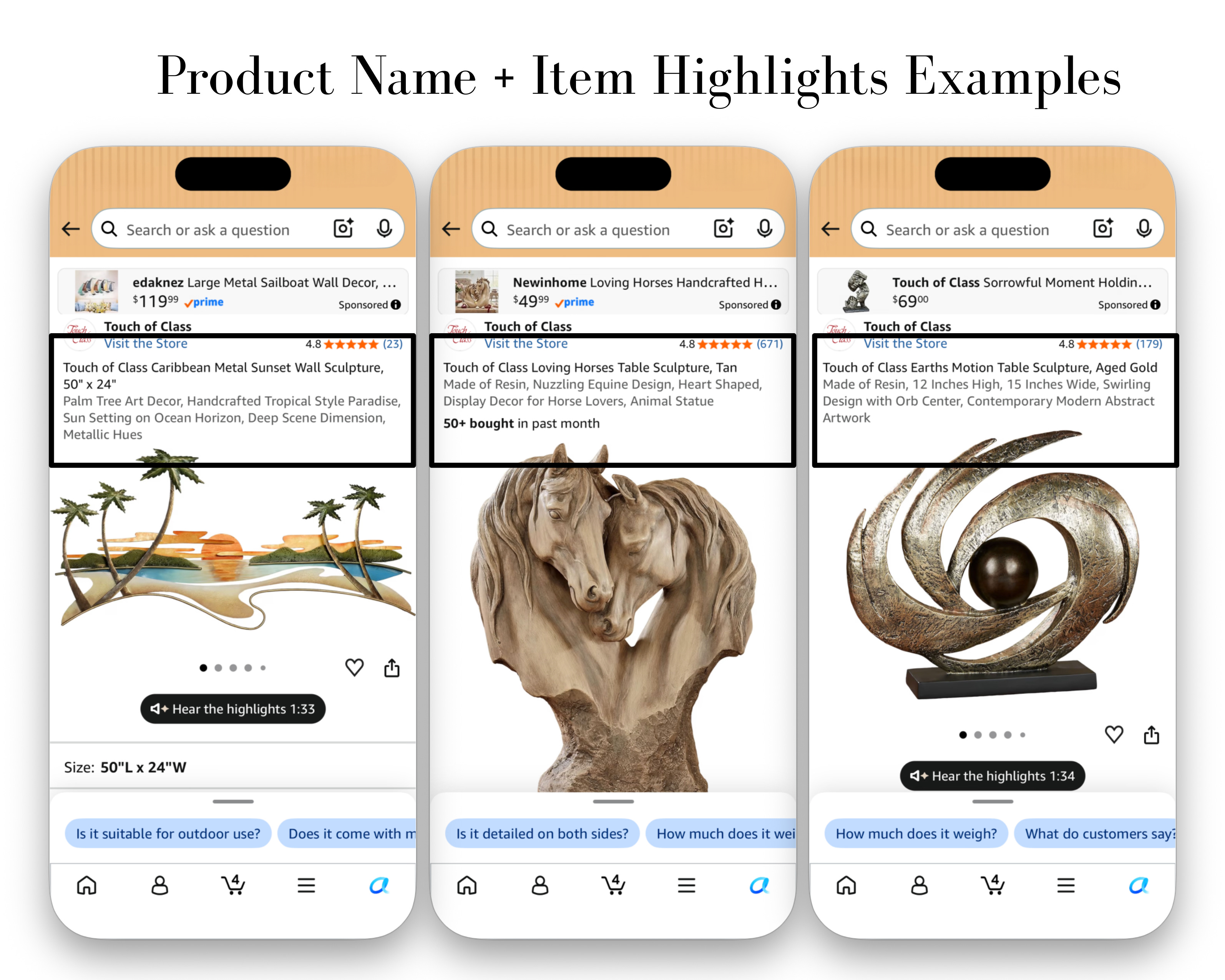
How Amazon Is Splitting Titles
The 75-character Product Name carries product identity, while the 125-character Item Highlights layer carries product relevance.
The Product Name gives Amazon a cleaner sense of what an item actually is, and the Item Highlights provide Amazon a cleaner relevance layer that explains a use case, feature, material, or buying reason without overloading the title. Item Highlights serve as a primary means of product understanding. Both layers still feed Amazon SEO.
A lot of people are reacting to the shorter titles, but the change makes far more sense once you look at how it plays out on Alexa for Shopping,
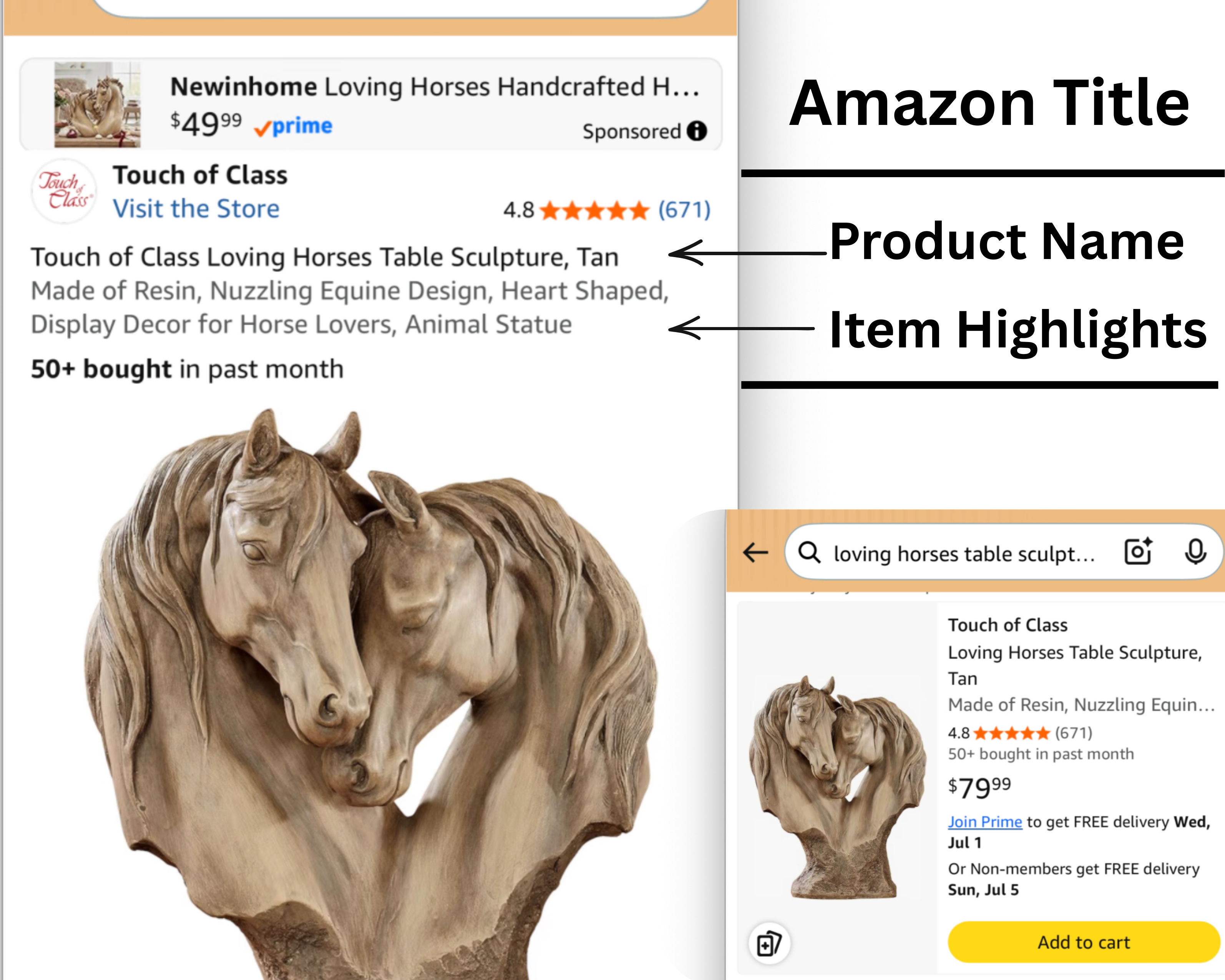
Alexa for Shopping Compatibility
In an Alexa for Shopping product card, 75 characters seem ideal for product identity because shoppers need to recognize what the item is immediately. The 125-character summary then seems ideal for relevance and comparison because it provides enough room to explain a use case, feature, material, or buying reason without crowding the name. Shorter Product Names also sound more natural when Alexa reads them aloud on Echo devices, and the Item Highlights create a clean follow-up layer that gives Alexa quick language around use case, feature, material, compatibility, buying reason, or shopper fit. I am already seeing these title changes inside Alexa for Shopping experiences, paired with summarized product data from Item Highlights, and personalization factors. Echo voice shopping has updated on mine as well, and it is worth trying.
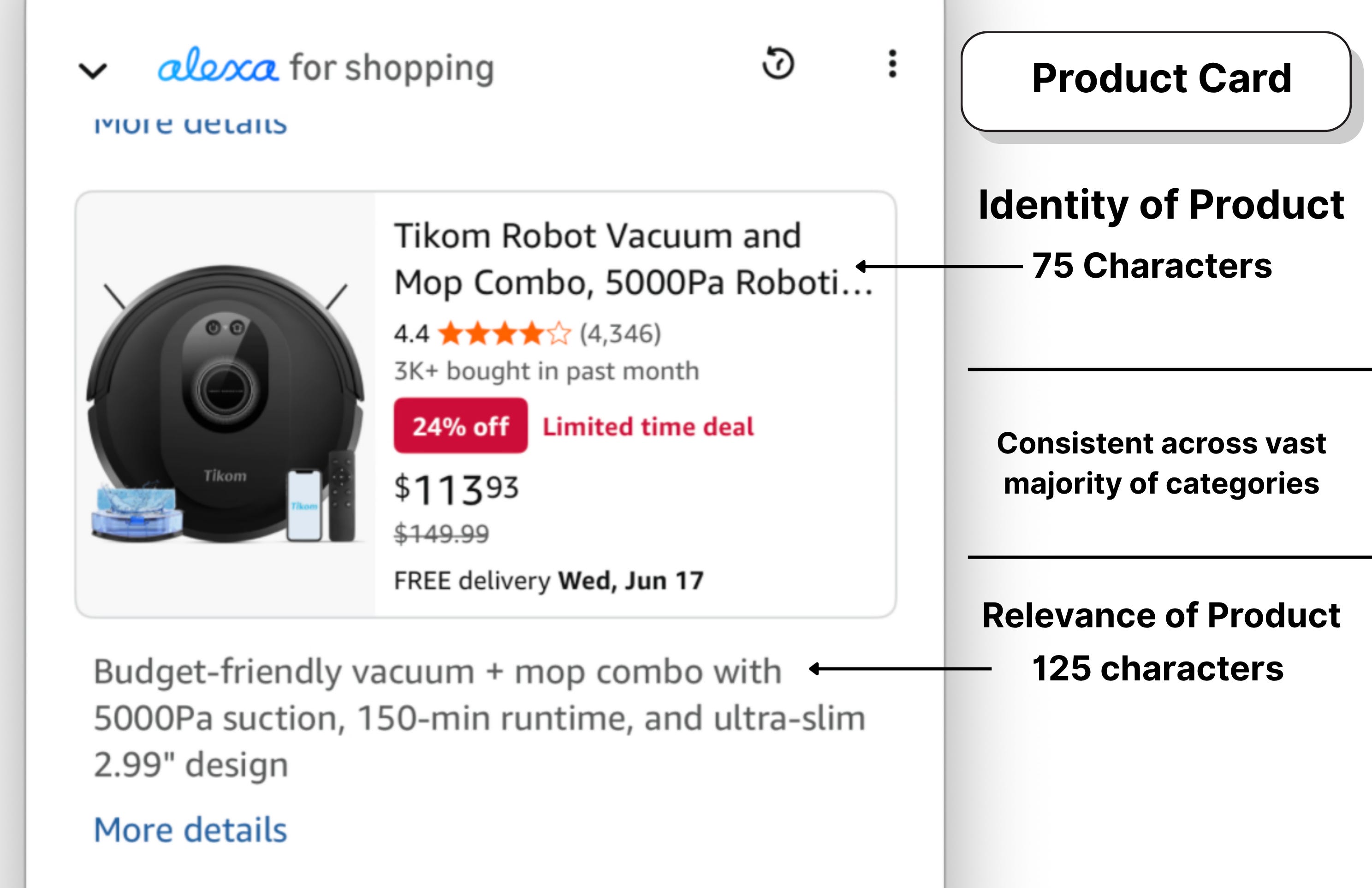
Mobile-First Readability
Amazon’s own language points to mobile display as a major reason for the title change, and that matters because mobile shopping rewards clarity rather than title density. Detail density shifts into the 125-character layer. A shopper scanning a small screen needs a clean image, a readable title, clear pricing, offer context, a delivery promise, and a short reason to care. Long titles may index terms, but they often weaken comprehension within compact mobile layouts, which is exactly why the shorter Product Name works better on a phone. These will be instrumental in displaying across mobile shopping cards, Alexa Shopping recommendations, Echo voice responses, AI comparison systems, agentic commerce workflows, and product-card commerce surfaces.
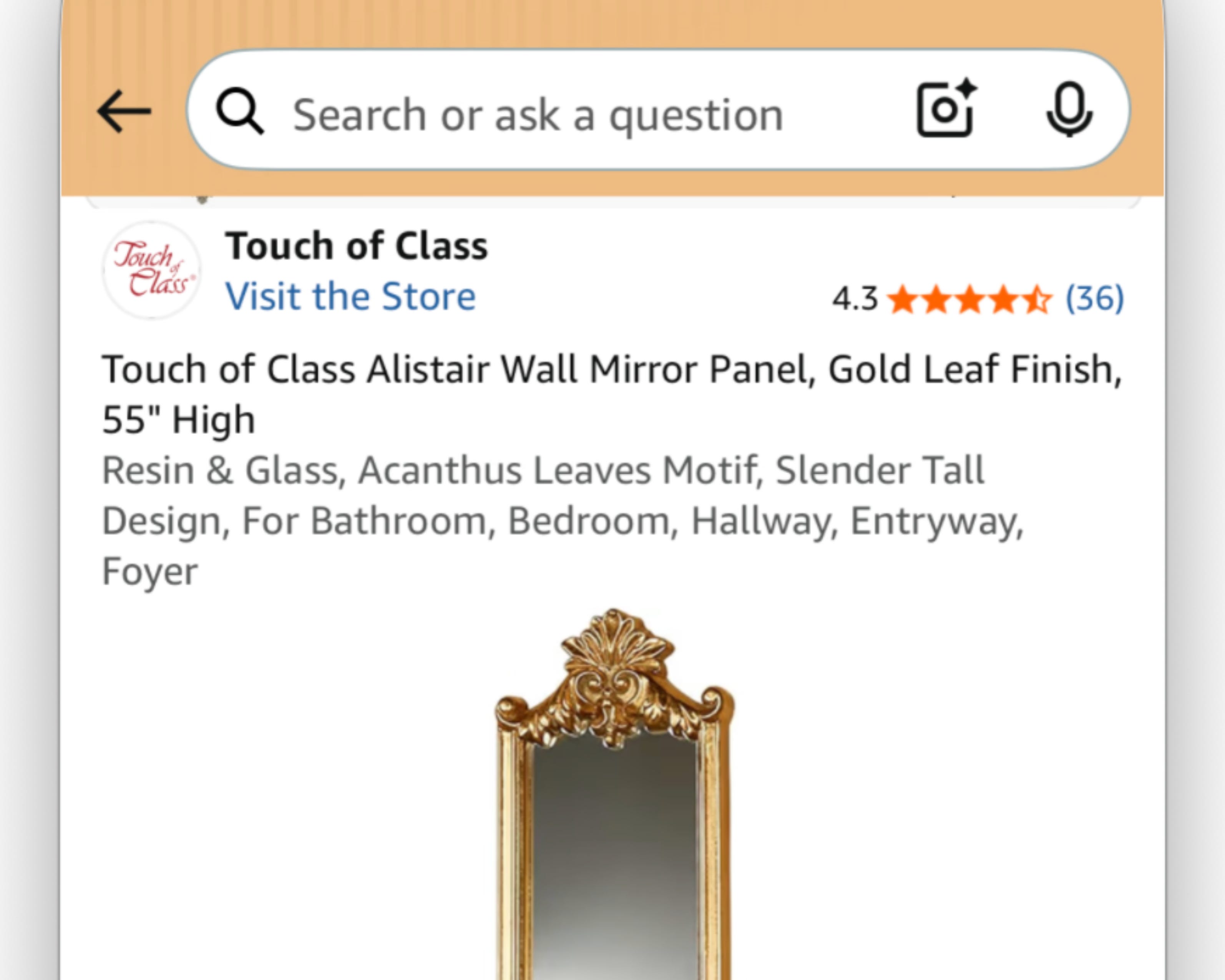
Consistency Across Online Commerce Surfaces
Amazon also says the shorter title format is meant to be consistent with other online stores, and that line matters because commerce is moving beyond isolated product detail pages. Product information increasingly needs to work across marketplaces, storefronts, shopping assistants, and agentic commerce systems. I would connect this carefully to the Universal Commerce Protocol, not as a direct cause, but as evidence of a broader shift toward cleaner, more structured, and more portable product data across commerce surfaces. Product pages are becoming structured inputs rather than standalone destinations.
Amazon SEO Is Not Dead
The wrong takeaway is that shorter titles eliminate Amazon SEO. They do not. A9-style relevance still depends on indexing, product type, attributes, browse classification, conversion, price, reviews, availability, offer quality, and content depth. What changes is title dependency. Titles are not storage containers for every keyword. Product identity now has to work harder in the Product Name, and product relevance has to work harder in the Item Highlights. Everything else has to support the broader product graph, including bullets, backend terms, attributes, images (some), A+ content (some), reviews, pricing, availability, and offer signals. Amazon Title optimization is now more structured, requiring our Amazon SEO to become cleaner in our content architecture across all facets of product detail pages.
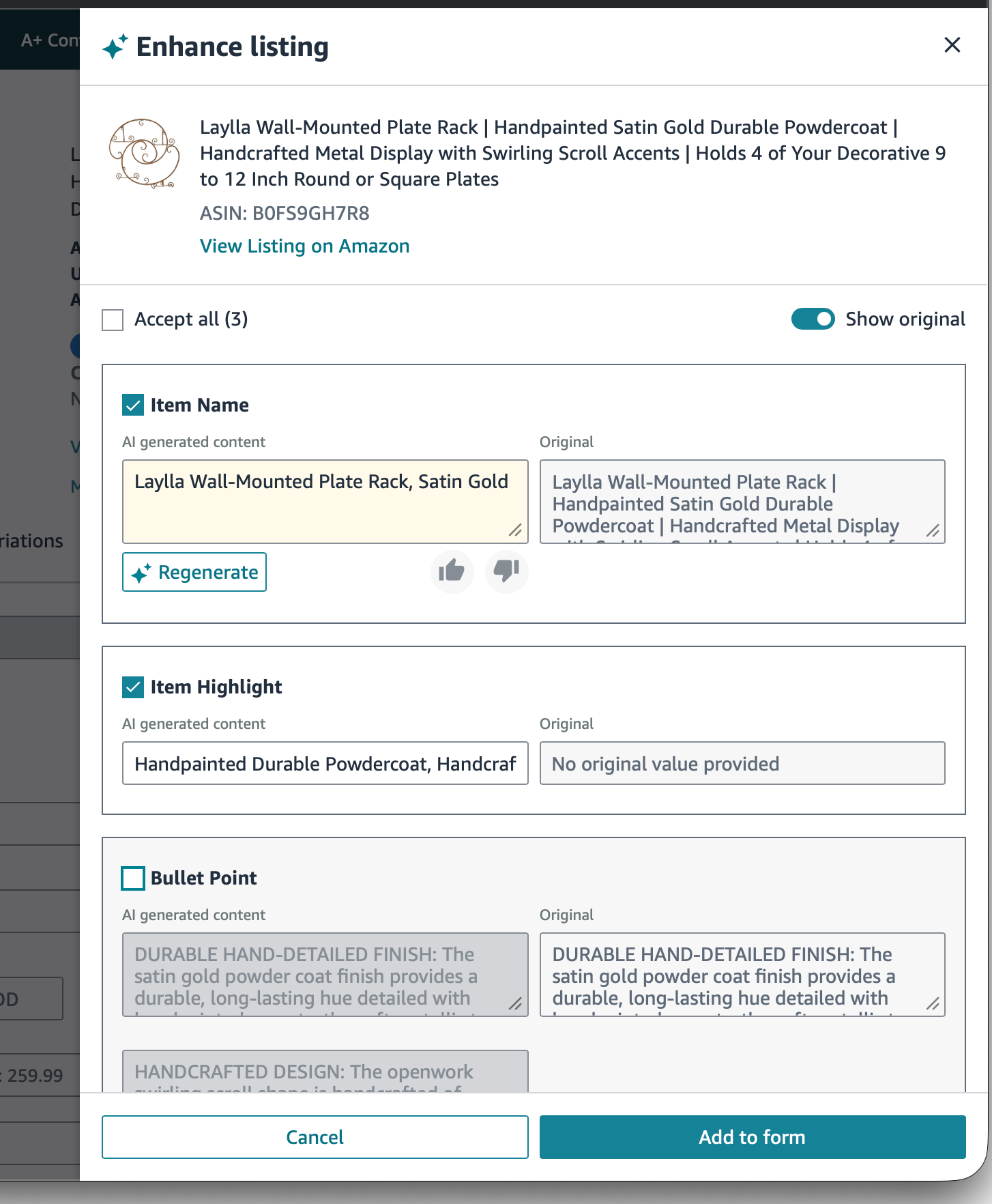
Here is an example of the interface that actually changes keyword phrases you would have otherwise counted on to give you sales. I would not trust Amazons listing enhancer outright. If you do, make sure to split test low priority products now that way when you have to update your hero products, you will be prepared (if you havent done that already).
Where This Is Heading
Amazon is shortening titles on paper, but strategically the change reshapes how products are packaged for mobile shoppers, AI comparison, and assistant-led commerce. Agentic Commerce Optimization is increasingly becoming an imperative for brands, and as the examples below show, that is no less true on Amazon.